


Follow the song into its parts
Play a stream or local track, then switch between instrumental and vocal output. Selected stems are saved to a dated folder in shared 44.1 kHz stereo. The default is 24-bit Apple Lossless. An optional pack can separate bass, drums, piano and other instruments during playback or process a recording.
Live playback coordinates five MDX models. Its timing policy drops a slow member after consecutive late chunks, retries failures behind buffered audio, and holds up to five minutes of decoded PCM for recovery. Model count, latency and memory all affect what the listener hears next.
Build a listening list from the data
One four-stem BS-RoFormer was compared with the mean vocal estimate of five MDX models across 50 centered, 5.92-second stereo AAC previews from SigSep’s MUSDB18 release. It scored above baseline on 35 clips. The median paired change was +0.29 dB, with individual clips from −5.12 to +7.83 dB.
The benchmark reports unfiltered, scale-sensitive signal-to-error ratios against isolated vocal references. The outliers point to clips for a human audition before a model choice.
An iPhone 15 Pro Max probe measured one warm Inst HQ 3 window at 1.004 seconds and 125 MiB after prediction on CPU, versus 0.745 seconds and 1,738 MiB with GPU allowed. That quarter of a second cost an extra 1,613 MiB on the phone. A full song is the next listening test.
Make a shader your own
Open a built-in visual in the workbench and change the value that sets the thickness of a line. Preview the change with sample audio, then try it against the song. The lessons introduce bass, mids and treble alongside inputs from the hardware in your hand, including touch and tilt. Save a new version or share the source through Files and iCloud Drive.
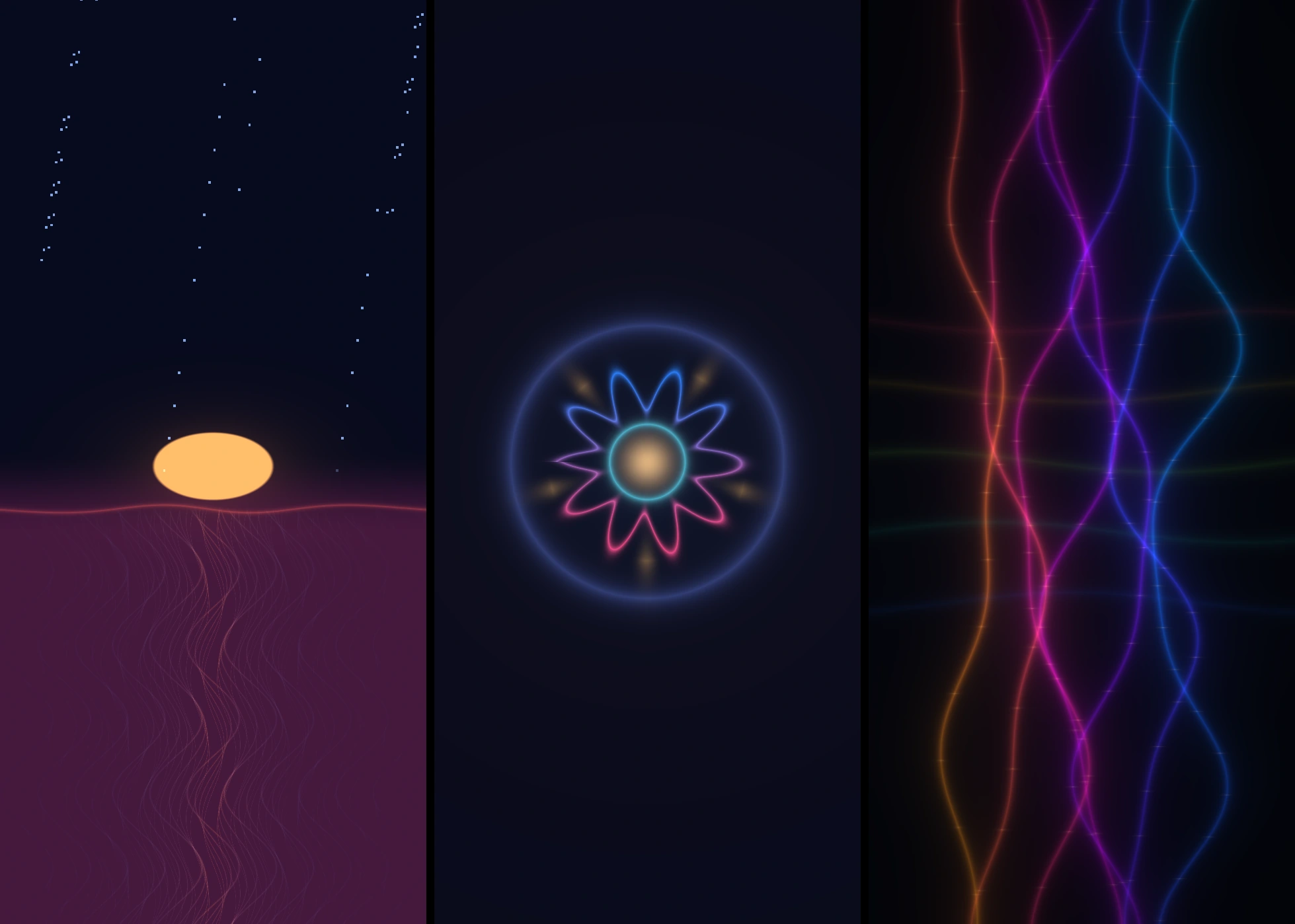
Open the Phosphor Petal study and load its source into the workbench. The mids change the number of petals, the bass moves the core and the treble picks out the spokes. Change one mapping and play the same passage. You’ve just made an experiment in signal processing and geometry out of a few bars of music.
Tidal Relay, Phosphor Petal and Signal Loom are original CC0 studies made for this gallery in Velvet’s Metal renderer. Each study includes the editable shader and an experiment to try against a song. The player also supports WebGL. Bring your own shader or pick a Shadertoy artist who invites remixes. Credit the artist and share what you changed.